Promissory note and the difference between it, bill of exchange and check in Saudi law
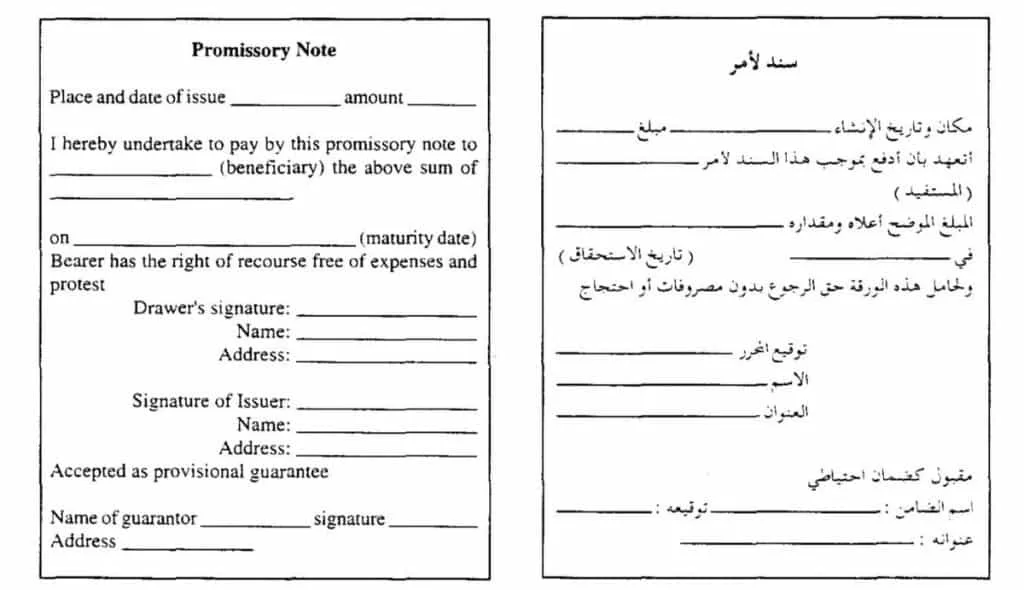
Promissory note and the difference between it, bill of exchange and check in Saudi law
introduction
Commercial papers are among the most important financial instruments relied upon by the Saudi system to regulate transactions and protect the rights of individuals and companies. The most prominent of these instruments are promissory notes , bills of exchange , and checks . Although they are similar in that they are means of proving debt and ensuring repayment, there are fundamental differences between them in terms of form, components, and uses.
First: Promissory note
- Definition : A written commitment by which a person (the issuer) undertakes to pay another person (the beneficiary) a specific amount on a specific date or upon demand.
- Its characteristics :
- A direct and clear pledge from the debtor to pay.
- It does not require a third party (just an editor and a beneficiary).
- A powerful proof of debt that can be executed directly before the enforcement judge.
- Text of the system : It is regulated by Articles (85-88) of the Saudi Commercial Papers System .
Second: The bill of exchange
- Definition : A written order issued by one person (the drawer) to another person (the drawee) requesting him to pay a specific amount to a third person (the beneficiary) at a specific date.
- Its characteristics :
- It includes three parties: the drawer, the drawee, and the beneficiary.
- It is more complex than a promissory note because it is based on a three-way relationship.
- Endorsable (transferring the right to another person by signing on the back of the paper).
Third: The check
- Definition : An unconditional order issued by the account holder (drawer) to the bank (drawee) to pay a specific amount upon presentation to the beneficiary.
- Its characteristics :
- An immediate payment instrument, not a credit instrument.
- It must be drawn on a bank only.
- The due date may not be postponed (if there is a postponed date, it is considered void).
- It has strong criminal protection in the Saudi system (criminalizing the issuance of a check without sufficient funds).
The essential differences between a promissory note, a bill of exchange, and a check
| element | Promissory note |
|---|